
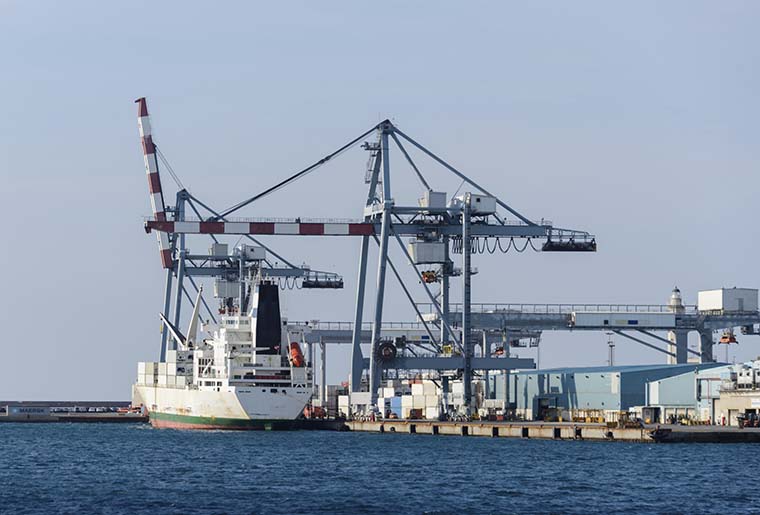
British businesses eyeing the Canary Islands market face an unexpected paradox: these Spanish territories lie closer to Africa than to Europe, yet they operate under a unique fiscal regime that transforms every shipment into a customs operation. Since Brexit reshaped UK-EU trade relations, understanding Canary Islands customs has become critical for British exporters and importers seeking to tap into this strategic Atlantic hub. Whether you’re shipping consumer goods to Tenerife or sourcing products from Gran Canaria, the islands’ special economic status demands careful navigation. This guide unpacks the customs complexities that British traders must master to succeed in this distinctive market.
The Canary Islands’ Unique Position in European Trade
The Canary Islands occupy a peculiar position within European commerce that sets them apart from any other Spanish region. Understanding this special status is essential for British businesses planning operations with the archipelago.
Neither Fully EU Nor Fully Outside
While the Canary Islands form part of the EU Customs Territory, they remain outside the EU’s fiscal harmonisation framework. This means goods moving between the UK and the Canaries undergo full customs procedures, despite both territories having agreements with the European Union. The islands apply their own taxation system rather than standard EU VAT, creating a fiscal environment that differs markedly from mainland Spain.
This dual status emerged from the islands’ geographical position and historical development needs. Located approximately 100 kilometres from the African coast, the archipelago required special economic measures to remain competitive and foster local industry.
The REF: A Framework Built for Island Development
The Canary Islands operate under the Economic and Fiscal Regime (REF), a comprehensive system designed to compensate for the islands’ remoteness and insularity. Established through both Spanish constitutional provisions and EU treaty recognition, the REF grants the archipelago fiscal advantages unavailable elsewhere in Spain.
The regime includes several distinctive features: Free Zones in Gran Canaria and Tenerife where goods can be stored and processed without customs duties, and the Special Canary Zone (ZEC), which offers a remarkably low 4% corporate tax rate for qualifying entities. These incentives position the islands as an attractive base for companies engaged in international trade, particularly those targeting African and Latin American markets.
How Brexit Changed the Rules for British Traders
The UK’s departure from the European Union fundamentally altered how British businesses interact with all EU territories, including the Canary Islands. The changes extend beyond simple paperwork additions.
Post-Brexit Documentation Requirements
British exporters to the Canary Islands must now prepare comprehensive customs declarations for every shipment. The Single Administrative Document (SAD), known in Spanish as DUA (Documento Único Administrativo), has become mandatory regardless of shipment value. This represents a significant shift from pre-Brexit arrangements when goods moved more freely.
UK businesses must account for separate export and import declarations, with importers remaining responsible for providing accurate information even when using third-party customs agents. The documentation must include detailed product descriptions, HS codes, invoice values, and proof of origin to benefit from preferential tariff treatment under the Trade and Cooperation Agreement (TCA).
Rules of Origin and Preferential Treatment
The TCA ensures zero tariffs between the UK and EU territories, including the Canary Islands, provided goods meet specific rules of origin requirements. These rules determine whether a product qualifies as “originating” based on where it was manufactured or substantially transformed.
For British exporters, this means maintaining detailed records proving that goods are either wholly obtained in the UK or have undergone sufficient processing to qualify for preferential treatment. Failure to demonstrate origin can result in standard tariffs being applied, eroding competitiveness.
Understanding Canary Island Taxation: IGIC vs VAT
British traders accustomed to VAT must recalibrate their understanding when dealing with the Canary Islands, where an entirely different indirect tax system applies.
The Canary Islands levy IGIC (Impuesto General Indirecto Canario) instead of Spanish VAT. While functionally similar to VAT, IGIC operates at considerably lower rates, creating both opportunities and compliance challenges for UK businesses.
| Tax Type | Standard Rate | Territory | Application |
| UK VAT | 20% | United Kingdom | Goods and services in UK |
| Spanish IVA (VAT) | 21% | Mainland Spain | Goods and services in Peninsula and Balearics |
| IGIC | 7% | Canary Islands | Goods and services in archipelago |
IGIC Rate Structure
The standard IGIC rate stands at just 7%, significantly below UK VAT or Spanish IVA. However, the system includes multiple rate bands:
- Zero rate (0%): Basic necessities, certain foodstuffs, books, and newspapers
- Reduced rate (3%): Optical products with prescription, contact lenses, specific healthcare items
- Standard rate (7%): Most goods and services not covered by other rates
- Increased rate (9.5%): Luxury goods, certain vehicles, and specific services
AIEM: The Additional Import Levy
Beyond IGIC, certain products face the AIEM (Arbitrio sobre Importaciones y Entregas de Mercancías en las Islas Canarias), an import duty designed to protect local production. AIEM rates typically range between 5% and 15% depending on the product category. British exporters must verify whether their goods fall under AIEM-applicable categories to accurately calculate landed costs.
Common AIEM-affected categories include processed foods, beverages, construction materials, and certain manufactured goods where local Canarian industry exists.
Practical Challenges for UK-Canary Islands Trade
British businesses operating with the Canary Islands encounter specific operational hurdles that require strategic planning and expert guidance.
Customs Valuation Complications
The taxable base for IGIC and AIEM includes not just the invoice value but also transport costs and insurance up to the Canary Island port of entry. This CIF (Cost, Insurance, and Freight) valuation method means British exporters must carefully document all logistics expenses.
Incorrect valuation triggers customs inspections, delays, and potential penalties. British firms must ensure their invoicing clearly separates product costs from ancillary charges while maintaining documentation that supports the declared values.
Transit and T2LF Documentation
Goods originating from EU member states require T2LF customs documents when entering the Canary Islands, serving as proof that products are Community goods. For British exporters routing shipments through mainland Europe before onward transport to the islands, understanding whether T2LF or alternative documentation applies becomes crucial.
The complexity multiplies when goods transit through multiple jurisdictions, requiring coordination between UK customs, transit country authorities, and Canarian customs officials.
E-commerce and B2C Complications
British online retailers face particular challenges when selling directly to Canary Island consumers. Websites displaying UK VAT-inclusive prices must clearly communicate that customers will face additional charges upon delivery: IGIC, potential AIEM, and customs clearance fees.
Transparency prevents customer complaints and returns. Many successful British e-commerce operators now implement location-based pricing that automatically adjusts for Canary Island deliveries, showing the estimated total landed cost before purchase completion.
Logistics and Transit Times
Unlike shipments to mainland Spain, goods destined for the Canary Islands require sea or air freight from the UK. Delivery timelines must account for both the road journey to southern Spanish ports like Cádiz or Huelva and the subsequent ferry crossing to the islands, as ferry services operate less frequently than road haulage.
British exporters should build 5-10 days minimum into their delivery schedules for standard sea freight routes, with air freight offering faster but costlier alternatives for time-sensitive shipments.
UK-Canary Islands Trade: Current Landscape
Despite the administrative complexities, commercial ties between Britain and the Canary Islands remain robust, driven primarily by the islands’ importance as a British tourism destination.
Tourism as Trade Driver
British tourists spent €1.71 billion in the Canary Islands during Q2 2024 alone, representing 41% of total tourist expenditure in the archipelago. This massive visitor flow creates sustained demand for British products, from consumer goods stocked in tourist areas to hospitality supplies for hotels and restaurants catering to UK preferences.
The tourism connection extends beyond direct consumption. British expatriates residing in the islands and holiday home owners generate year-round demand for UK products, particularly foods and lifestyle goods unavailable locally.
Strategic Opportunities
The Canary Islands’ position as a bridge between Europe, Africa, and Latin America offers British businesses strategic opportunities beyond simple bilateral trade. Companies establishing operations in the ZEC can leverage the 4% corporate tax rate while accessing preferential trade agreements that Spain and the EU maintain with numerous territories.
British firms in sectors such as maritime services, renewable energy technology, and digital services increasingly view the Canaries as a testing ground for Spanish-speaking markets without the full complexity of Latin American market entry.
Frequently Asked Questions
- Do British goods benefit from zero tariffs when exported to the Canary Islands?
Yes, provided they meet rules of origin requirements under the UK-EU Trade and Cooperation Agreement. British exporters must be able to demonstrate that goods are either wholly obtained in the UK or have undergone substantial transformation qualifying them for preferential treatment. Proper documentation proving origin is essential to avoid standard tariff application.
- What’s the minimum value requiring customs declaration for UK-Canary Islands shipments?
All commercial shipments now require full customs declarations via the SAD/DUA, regardless of value. The previous €150 threshold exemption no longer applies to goods arriving from the UK post-Brexit. Even low-value parcels must clear customs with appropriate documentation.
- How does IGIC work for British businesses selling to Canary Island customers?
British exporters don’t charge UK VAT on Canary Island sales, as these constitute exports. The Canary Island importer or end customer pays IGIC upon customs clearance. British businesses should issue VAT-free invoices clearly marked as exports and inform customers about the IGIC obligation to avoid surprises upon delivery.
- Can British companies use their UK EORI number for Canary Island trade?
Yes. British Economic Operator Registration and Identification (EORI) numbers issued by HMRC remain valid for customs declarations covering UK exports to all EU territories, including the Canary Islands. However, importers in the Canaries must hold their own Spanish EORI numbers.
- What happens if my HS commodity code is incorrectly classified?
Incorrect classification can result in wrong AIEM rates being applied, customs holds, and potential fines. The HS code determines applicable duties and taxes, so errors create compliance issues and cost miscalculations. British exporters should verify codes using both UK and Spanish customs databases or consult customs specialists before shipping.
- Are there restrictions on specific product categories for UK-Canary Islands trade?
Beyond standard EU import restrictions (weapons, certain chemicals, endangered species), specific sanitary and phytosanitary controls apply to animal products, plants, and food items. British exporters of these categories face additional certification requirements and may require pre-clearance from Spanish health authorities. Goods arriving without proper certificates face rejection or destruction.
Conclusion
Trading between Britain and the Canary Islands demands more than standard export knowledge. The islands’ unique fiscal regime, combined with post-Brexit customs requirements, creates a multilayered compliance landscape where documentation errors can halt shipments and erode margins. From IGIC and AIEM calculations to rules of origin verification and transit logistics, British businesses need specialised expertise to navigate these waters successfully.
Agsa-Partida Logistics stands as your expert partner for UK-Canary Islands trade operations. Our deep understanding of the REF system, combined with comprehensive Brexit customs experience, ensures your goods flow smoothly between Britain and the archipelago. We manage the complete customs cycle: SAD/DUA preparation, HS code verification, rules of origin documentation, IGIC and AIEM calculation, and coordination with Canary Island customs authorities.
Whether you’re a British e-commerce business expanding into the Canaries, a manufacturer establishing supply chains, or an importer bringing island products to UK markets, Agsa-Partida Logistics transforms complexity into competitive advantage. Our bilingual team bridges UK and Spanish customs systems, preventing delays, minimising costs, and ensuring full regulatory compliance. With Agsa-Partida Logistics, the Canary Islands’ unique customs environment becomes an opportunity rather than an obstacle. Contact us to discover how we can streamline your British-Canary Islands trade operations.